Tornadoes
A violent, rotating column of air extending from a thunderstorm to the ground, characterized by a whirlpool-like funnel with extremely high winds (potentially over 300 mph) that cause immense localized destruction, often sounding like a freight train and appearing as a visible funnel or a cloud of debris.
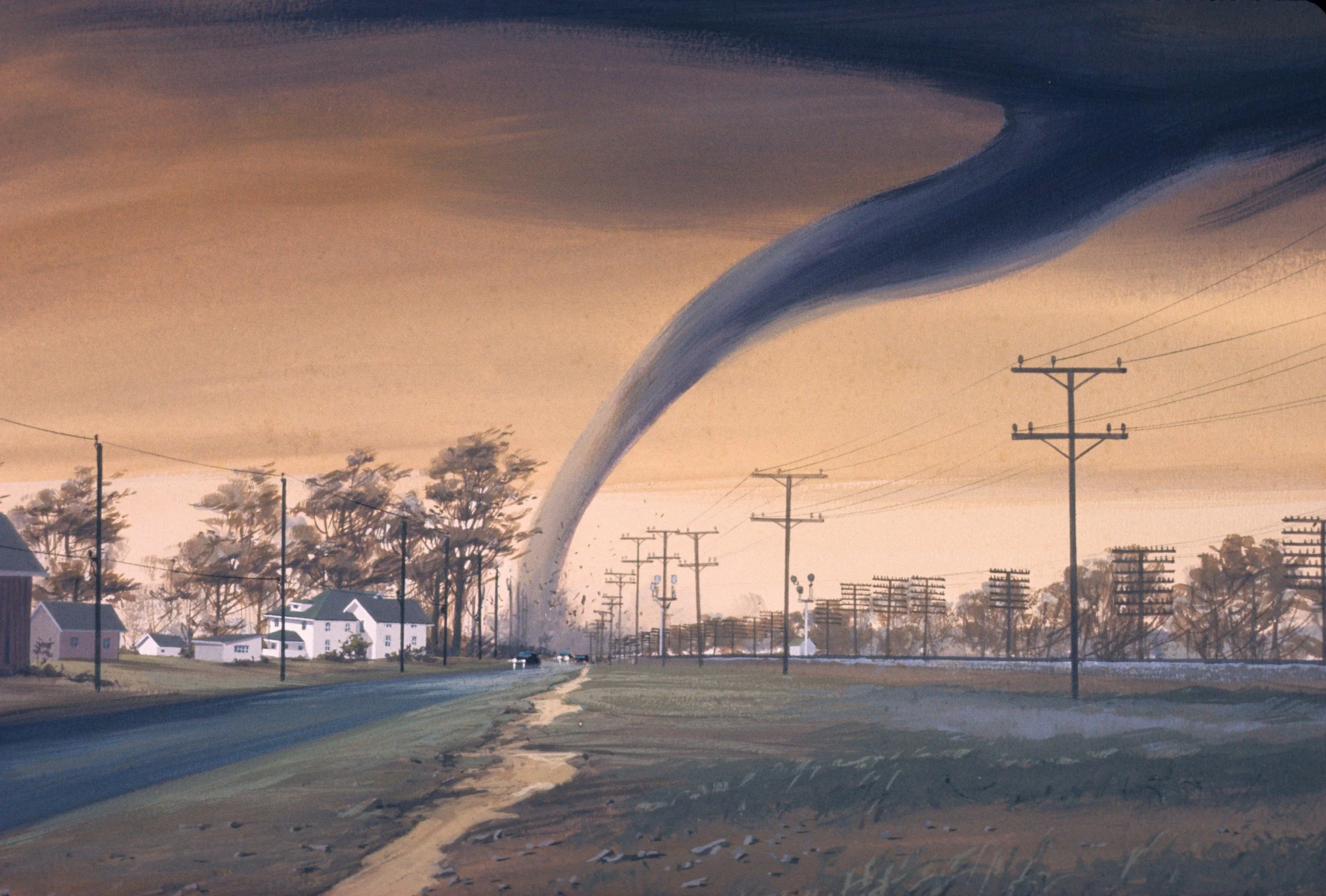
TORNADOES
Where They Occur:
Most common in "Tornado Alley" (Texas, Oklahoma, Kansas, Nebraska, South Dakota) and "Dixie Alley" (Mississippi, Alabama, Tennessee, Arkansas, Louisiana), but can occur in all 50 states.
Key Risks:
Extreme winds (up to 300 mph), flying debris, structural collapse, and secondary hazards like gas leaks and downed power lines.
Before Tornado Season:
Identify your tornado shelter: basement, storm cellar, or interior room on lowest floor with no windows
Practice tornado drills with your family
Prepare an emergency kit with helmets or hard hats, sturdy shoes, flashlight, first aid, whistle, and important documents
Have multiple ways to receive weather alerts (weather radio, phone apps, outdoor sirens)
Know the difference between a Watch (conditions favorable) and Warning (tornado spotted or indicated on radar)
During a Tornado:
Seek shelter immediately in your predetermined safe location
Get as low as possible, preferably underground
If no basement, go to an interior room on the lowest floor (closet, bathroom, hallway)
Get under sturdy furniture and protect your head and neck with arms and blankets
Stay away from windows, doors, and outside walls
If in a mobile home, evacuate immediately to a sturdy building or storm shelter
If caught outside or in a vehicle, do not try to outrun the tornado—get to the lowest area possible and lie flat, covering your head
After a Tornado:
Check yourself and others for injuries and render first aid
Use flashlights, not candles (risk of gas leaks)
Be extremely cautious around damaged buildings
Stay away from power lines and puddles with wires
Monitor local news for emergency information
Photograph damage for insurance claims
Resources:
NOAA Storm Prediction Center: spc.noaa.gov
Ready.gov Tornadoes: ready.gov/tornadoes
Center for Disease Control Tornadoes: cdc.gov/tornadoes