First Aid Kit Basics
Step 4: First Aid Kit Basics
What You Need to Know
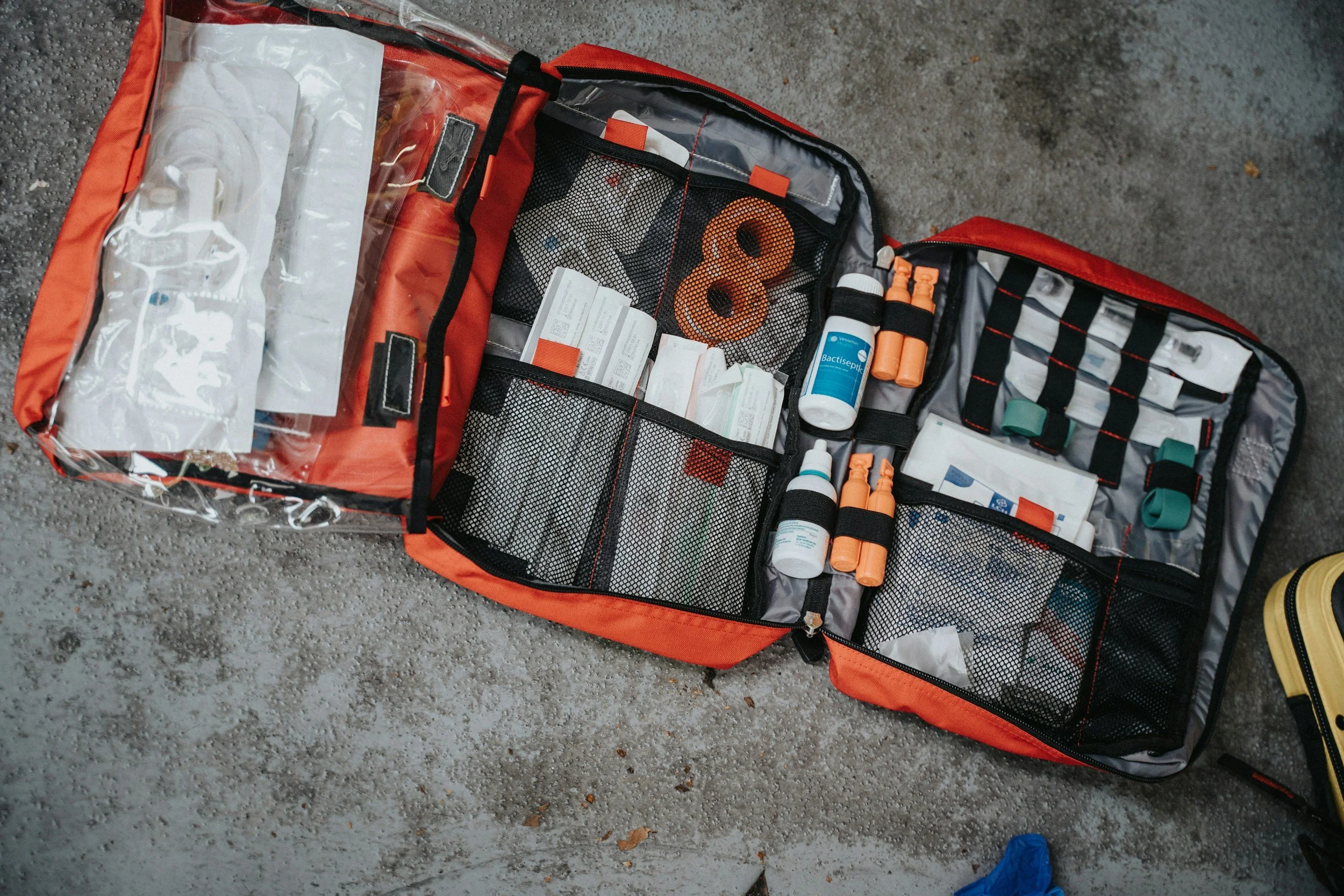
You don't need a hospital in a box, just supplies to handle the most common injuries: cuts, burns, sprains, and minor illnesses. The American Red Cross provides excellent guidance on what belongs in a home first aid kit.
Think of your first aid kit as a partnership with professional medical care. It handles immediate needs and minor issues, buying you time until you can get to a doctor or until help arrives.
Essential Items for a Home First Aid Kit
Wound Care:
Adhesive bandages (various sizes)
Sterile gauze pads (4x4 inch)
Rolled gauze bandages
Adhesive tape
Antibiotic ointment
Antiseptic wipes or solution
Medications:
Pain relievers (acetaminophen, ibuprofen, aspirin)
Antihistamine (for allergic reactions)
Anti-diarrheal medication
Antacid
Hydrocortisone cream (1%)
Tools & Equipment:
Tweezers (for splinters)
Scissors
Digital thermometer
Disposable gloves (several pairs)
Instant cold packs
Elastic bandages (ACE wraps)
Triangular bandage (for slings)
Other Essentials:
Emergency blanket
First aid manual (American Red Cross or equivalent)
List of emergency phone numbers
Medical consent forms for children
Any personal medications or prescriptions
Where to Keep It
Primary location: Kitchen or main bathroom (accessible but out of children's reach)
Additional kits: Each vehicle should have a smaller first aid kit
Storage tips:
Use a clear container so you can see contents
Label clearly: "FIRST AID"
Check every 6 months for expired items
Keep instructions/manual inside the kit
Customization for Your Family
Add if you have young children:
Children's pain reliever/fever reducer (check dosing by age)
Pediatric electrolyte solution
Add if family members have specific needs:
Epinephrine auto-injector (EpiPen) for severe allergies
Inhaler for asthma
Glucose tablets for diabetes
Naloxone for potential drug overdoses
Any critical prescription medications (at least 3-day supply)
Resources
American Red Cross First Aid Kit: https://www.redcross.org/get-help/how-to-prepare-for-emergencies/anatomy-of-a-first-aid-kit.html
CDC Emergency Kit: https://www.cdc.gov/cpr/preparedness/kit/index.html
FEMA Ready.gov: https://www.ready.gov/kit