Fire Extinguishers
Step 3: Fire Extinguishers
What You Need to Know
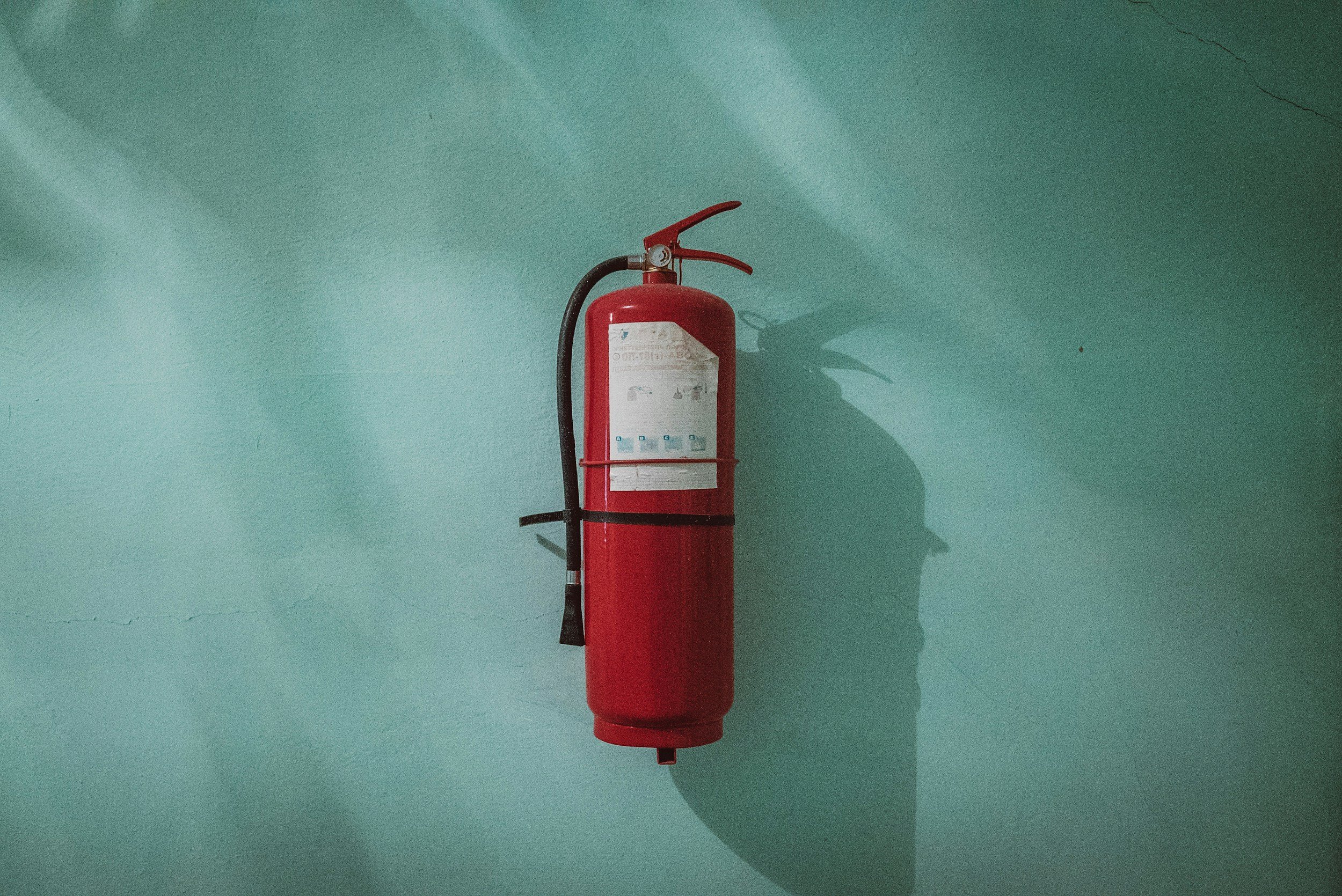
Most home fires start small. A fire extinguisher gives you a chance to put it out before it becomes catastrophic—but only if you have the right type, know where it is, and know how to use it.
Here's the key: fire extinguishers are for small, contained fires. If the fire is spreading, if there's heavy smoke, or if you're unsure, get out and call 911. Your life is worth infinitely more than your stuff.
Which Type to Get
For home use, choose ABC-rated extinguishers:
A = Ordinary combustibles (wood, paper, cloth)
B = Flammable liquids (grease, gasoline, oil)
C = Electrical fires
ABC extinguishers handle the most common home fire types. You'll see this rating clearly marked on the label.
Recommended size: 5-10 lbs for most homes (larger is not always better because you need to be able to actually lift and use it)
Where to Place Them
Minimum locations (according to NFPA):
Kitchen (but not right next to the stove, you don't want to reach over flames to get it; place near an exit)
Garage (where flammable liquids and tools are stored)
Near bedrooms (in the hallway, so you can access while evacuating)
Placement rules:
Mount on the wall in plain sight (not hidden in a cabinet)
Place near exits when possible
Keep away from heat sources and direct sunlight
Hang so the top is 3-5 feet from the floor (easy to grab quickly)
How to Use: The PASS Method
P - Pull the pin (breaks the seal)
A - Aim low (point at the base of the fire, not the flames)
S - Squeeze the handle slowly
S - Sweep from side to side at the base of the fire
Practice this motion without actually discharging your extinguisher, muscle memory matters in emergencies.
Maintenance
Check monthly:
Make sure extinguisher is in place and accessible
Check the pressure gauge, the needle should be in the green zone
Look for visible damage (dents, rust, leaks, clogged nozzle)
Professional inspection:
Have extinguishers professionally inspected every 1-2 years
Most fire equipment companies offer this service
Some fire departments offer free inspections, so call your local station or check their website if they have appointments.
When NOT to Fight a Fire
Get out immediately if:
The fire is spreading rapidly
There's heavy smoke
You can't fight the fire with your back to an exit
The fire is larger than a small trash can
You feel scared or uncertain
The rule: If in doubt, get out. Your life is irreplaceable.
Resources
NFPA Fire Extinguisher Information: https://www.nfpa.org/Public-Education/Staying-safe/Safety-equipment/Fire-extinguishers
Ready.gov Fire Safety: https://www.ready.gov/home-fires